Horses are top athletes, and peak performance is expected of them, especially during the competition season. The strain on the limbs is particularly high, which increases the risk of injuries such as tendon damage. Leg protection is a controversial topic in the riding world, with many different opinions. Dr. Jens Körner and veterinarian Eva-Maria Kruse of the Hanseklinik für Pferde explain the key points that should be considered from a medical point of view when using leg protection.
For effective protection, a distinction must be made between the different uses of leg protection equipment:
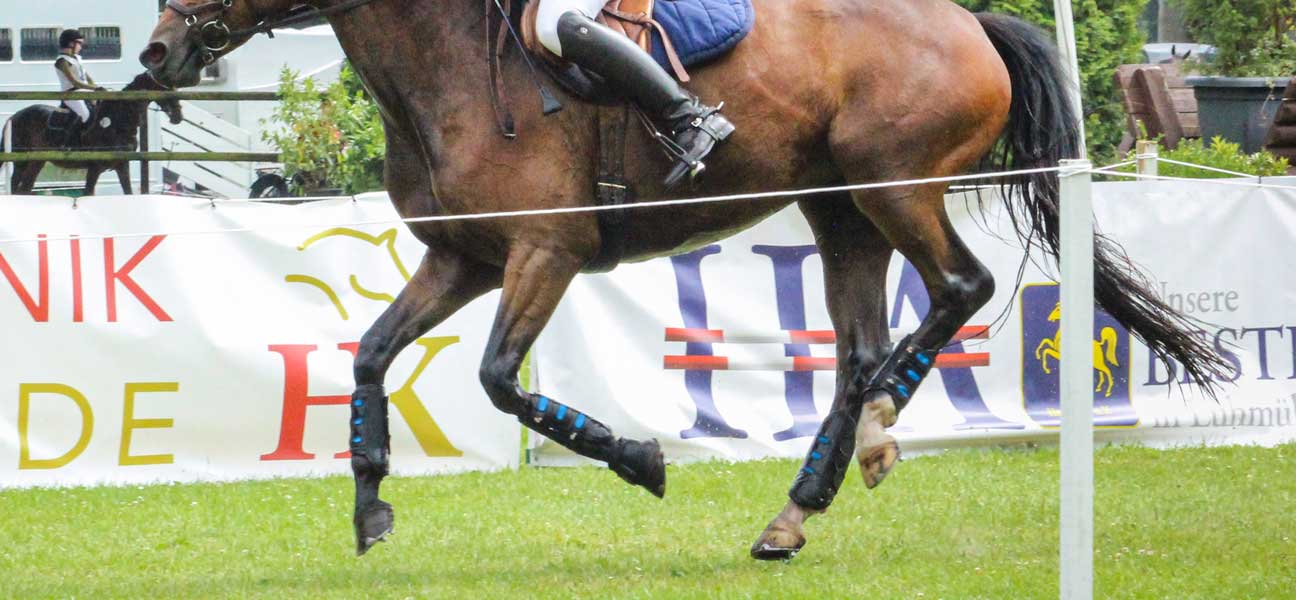
In sport, the aim is to protect the horse's legs from brushing and impact injuries caused by shoe edges, studs, bent clips, jump poles and other objects. A blunt blow from the fetlock of one limb against the highly tensioned tendons of another limb alone can tear tendon fibers instantly. A hard shell, for example in boots, can prevent this by spreading the pressure over a larger area. The frequent occurrence of splints on the inside of the leg shows how often young horses in particular strike their own legs through clumsiness.
Veterinarian Eva-Maria Kruse also recommends protecting the hooves from injury. Bell boots, for example, protect the heel bulbs from being stepped on, which is especially important for show jumpers when they put their hind feet down after a jump. Bell boots are also useful if a horse tends to pull off its shoes. Each time shoes are put on again, the nails damage the hoof horn, which is why hoof protection in the pasture can be useful.
Wraps are a popular form of leg protection in equestrian sport because they are said to support the leg. However, this cannot be confirmed medically. “The forces are too high for a wrap to provide support similar to a multi-layer Robert Jones bandage or a cast. This is a widespread misconception,” says Dr. Jens Körner.
Wraps offer a horse only little protection during riding. They cannot provide support! Rather, they are used to even out the visual symmetry of legs with different markings, which can make an observer think the horse's rhythm is irregular. White wraps in particular also visually emphasize the leg action of dressage horses, for example.
At rest, horses' legs below the knees and hocks have extremely poor blood circulation. In winter, cold-induced constriction of the blood vessels reduces circulation even further, and a kind of “heat exchanger mechanism” develops in the limbs. Warm blood from the body flows into the cold limbs and passes its heat to the cold blood flowing back up. The blood in the limbs therefore becomes even cooler, so that less cold blood flows into the body. This slows the metabolic processes in the leg even further. The result is poor wound healing with heavy formation of thick, raised scar tissue. Legs should therefore be checked especially carefully in winter. The right leg protection can help here as well. After cellulitis (a phlegmon with massive swelling, caused by a skin injury that often cannot be found), the skin tends to lose elasticity. It becomes “stretched out,” which can lead to a filled leg again and again. Applying wraps does not have a sufficient warming effect, but it can help the skin compensate for the lost elasticity.
Wraps offer comparatively little protection against contact injuries, but they protect better than nothing. The trend is moving toward stable boots or compression stockings, because wraps can cause several problems if they slip or are applied incorrectly. Incorrect wrapping can lead to inflammation of the communicating branch between the two main nerves at the back of the leg. Uneven pressure can cause scar-like reactions in areas of skin, which usually only show up later as white patches. Wraps applied too tightly can also cause the lymphatic vessels to stick together, which permanently affects lymph drainage and can lead to swollen legs again and again.
Ideally, a horse does not need leg protection when it is standing in its stall. However, if it tends to have swollen legs, a compression stocking can be advisable. In a swollen leg, there is fluid in the limb. Because the tissue is swollen, the skin also has to stretch. If this happens often, the skin loses elasticity permanently and becomes even more prone to swelling. Here, too, a compression stocking can support skin elasticity and counteract the fluid pressure.
Bell boots and hard-shell boots protect against external impact. Stable boots, wraps and compression stockings, in that order, offer decreasing protection against external mechanical impact but increasingly improve the supply and removal of metabolic and inflammatory products in the lower limbs, which supports healing. Dr. Jens Körner sums up: “As with many things in equestrian sport, leg protection is an individual decision that depends on the situation and requires weighing up the advantages and disadvantages.”


We kindly ask you to schedule appointments by phone. This way, we can plan the best treatment for your horse individually and directly.
+49 4282 - 5946 340Please note our separate visiting hours.
Please schedule your visit in advance. Allow approximately 1 hour, and kindly only touch your own horse.
Our clinic is available around the clock for emergencies.In case of an emergency, please call us immediately.