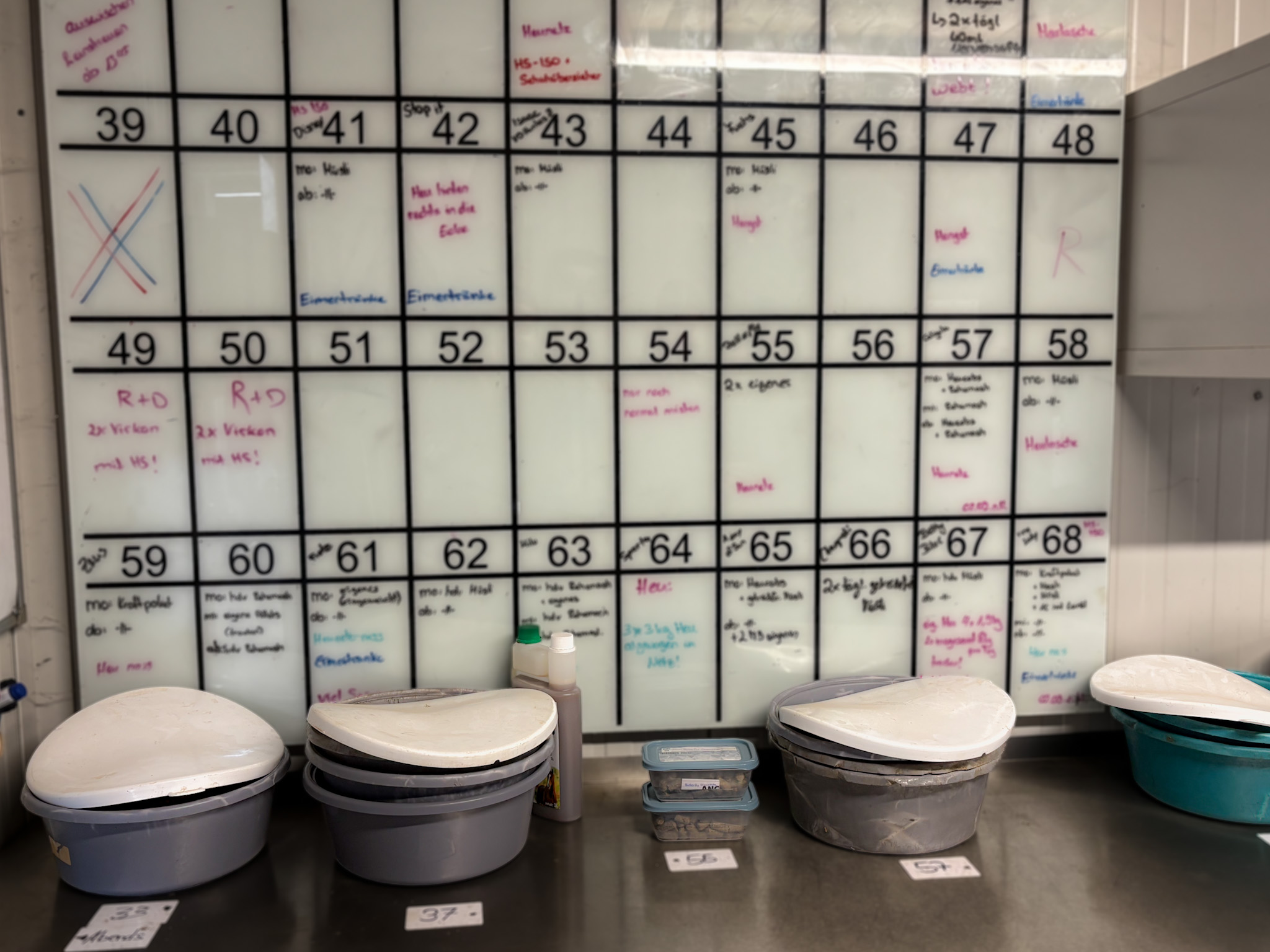
Mineral supplements, vitamins, dietary supplements, and, of course, the occasional treat: Many horse owners give a lot of thought to what goes into their horse’s feed trough. They want to make sure their horse has everything it needs. But in this case, more isn’t necessarily better. In practice, it’s clear that mistakes often aren’t the result of negligence, but rather of a desire to do the best possible job of caring for their horse’s health.
“The vast majority of horse owners go to tremendous lengths. The most common mistake, therefore, isn’t negligence at all, but a well-intentioned overfeeding of energy, minerals, vitamins, and various supplements,” explains Dr. Sonja Weiß, a veterinarian at the Hanseklinik für Pferde.
A mineral supplement here, another product there: It’s easy to end up with a variety of products. However, their ingredients do not automatically complement each other. If several of them are given at the same time, imbalances between individual minerals can arise. Furthermore, some substances are used even though there is no solid scientific basis for doing so.
Selenium illustrates just how crucial the correct dosage can be. This trace element can be toxic even in relatively small amounts. Dr. Sonja Weiß sums it up simply: “When it comes to supplements, less is more. It’s better to supplement selectively when there is an actual need. That way, the horse gets exactly what it really needs.”
In addition to minerals and vitamins, energy intake plays a key role. Being overweight increases the risk of equine metabolic syndrome and significantly raises the risk of laminitis. Sugar and starch, in turn, cause blood sugar and insulin levels to rise. For certain medical conditions, such as equine gastric ulcer syndrome or various myopathies, a low-sugar diet is even absolutely essential. However, there’s no need to forgo the occasional small treat: treats are perfectly fine. When in doubt, it’s worth checking the ingredients, particularly the energy density and sugar content.
Despite the wide variety of feed options available, one thing remains particularly important: good-quality roughage. As continuous feeders, horses are designed to consume food as frequently as possible. Hay should therefore normally be available at all times and form the basis of their diet. However, climate change is making it increasingly difficult to ensure consistent quality over the long term. This makes it all the more important to pay close attention, especially for horses with respiratory conditions.
A horse’s physical appearance can also indicate whether its diet is appropriate for the individual animal. Fat deposits on the mane or body may be noticeable, as may a lack of weight gain, poor musculature, and changes in coat condition or performance.
If you’re unsure, you can have the diet evaluated by a veterinarian. This will help determine whether adjustments are necessary and where there is an actual need. “There are three things I’d advise every owner to keep in mind: use high-quality forage as a foundation, use supplements only when necessary, and monitor weight regularly,” summarizes Dr. Sonja Weiß. “After all, a lean horse is a healthier horse.”


We kindly ask you to schedule appointments by phone. This way, we can plan the best treatment for your horse individually and directly.
+49 4282 - 5946 340Please note our separate visiting hours.
Please schedule your visit in advance. Allow approximately 1 hour, and kindly only touch your own horse.
Our clinic is available around the clock for emergencies.In case of an emergency, please call us immediately.