Keratitis, an inflammation of the cornea, is a common and often recurring condition in horses. In some patients, the disease cannot be adequately controlled with topical medication alone and may require intensive or surgical treatment.
The cornea is exposed daily to environmental irritants and microorganisms. If the natural protective barrier consisting of the tear film and corneal epithelium is disrupted, bacteria or fungi can penetrate deeper layers of the cornea.
Such disruption may be caused by trauma, foreign bodies, dry eye conditions or immune mediated processes. Once pathogens enter the cornea, infectious keratitis develops. Without prompt treatment, this can lead to painful corneal ulcers, impaired vision or, in severe cases, loss of the eye.
Depending on the severity and depth of the infection, intensive medical therapy may be sufficient. In deeper or progressive lesions, however, surgical intervention becomes necessary.
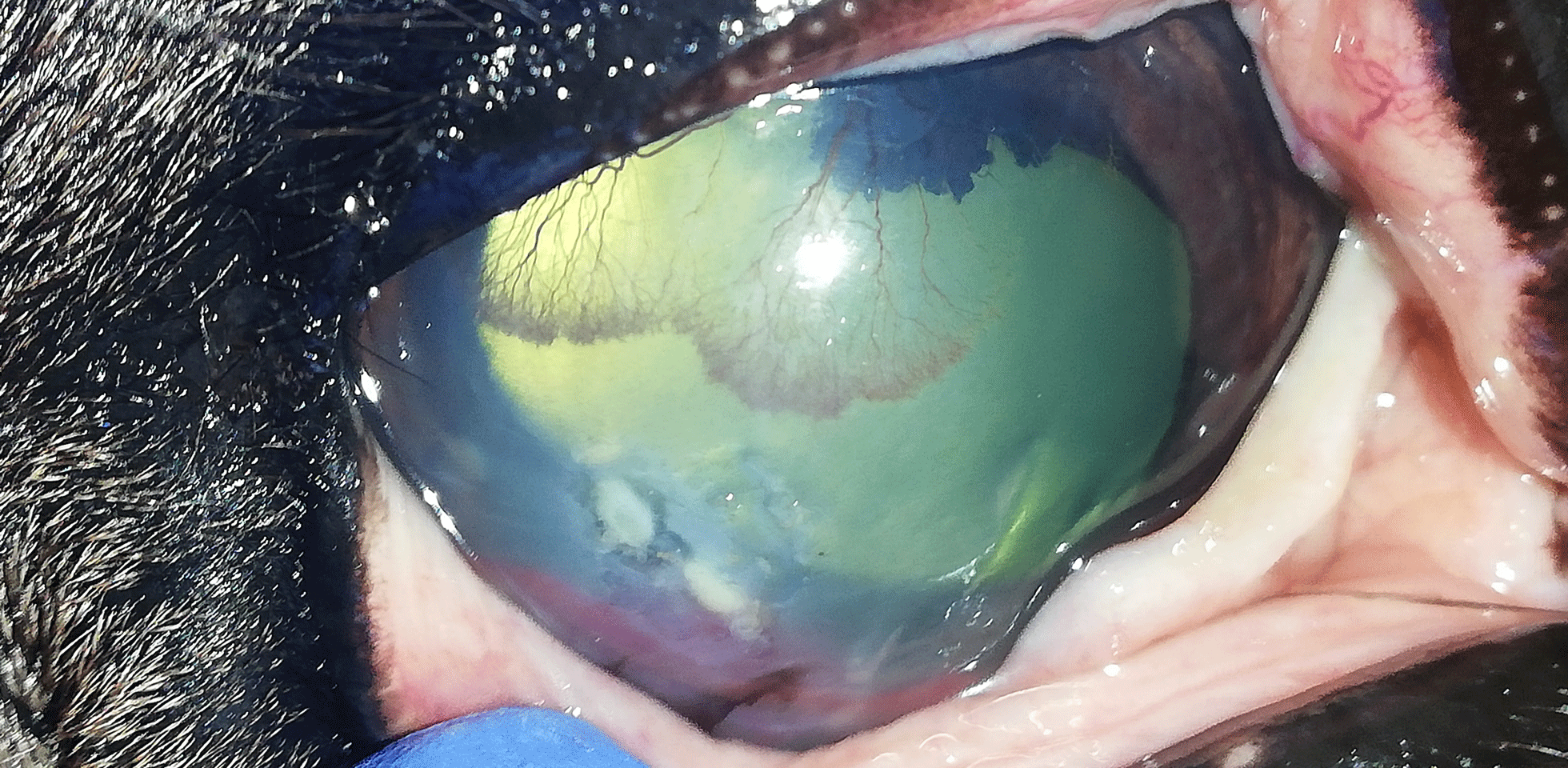
In this patient, keratitis was caused by a bacterial infection.

Bei diesem Patienten wurde die Keratitis durch Bakterien ausgelöst.

Corneal inflammation often develops suddenly and is typically painful for the affected horse. Common signs include:
If keratitis is suspected, a veterinarian should be contacted as soon as possible. Early treatment significantly improves the chances of healing and visual preservation.
Diagnosis is based on a comprehensive ophthalmic examination. This typically includes:
Further treatment decisions are always tailored to the individual findings.
If the corneal infection is deep or if an ulcer has already formed, conservative treatment alone is often insufficient. In these cases, surgical removal of infected tissue is required.
During keratectomy, chronically affected corneal tissue is carefully lifted and removed using specialized instruments. This eliminates local antigens that may repeatedly trigger inflammation. Depending on the extent and location of the keratitis, a relatively large wound surface may result, and healing can take several weeks.
With an uncomplicated healing process, a calm, comfortable eye and good visual function can usually be achieved.
Prognosis depends strongly on several factors:
Fungal infections of the cornea are particularly challenging and prone to recurrence. Delayed treatment or untreated infections may result in permanent corneal scarring, loss of vision or loss of the eye.
Yes. Keratitis often develops rapidly and is extremely painful. Without prompt treatment, it can quickly progress to deep corneal ulcers, scarring or even loss of the eye.
Common signs include excessive tearing, eyelid spasms, light sensitivity, conjunctival redness and a cloudy or milky appearance of the cornea. In advanced cases, corneal ulcers, vascular ingrowth or visible defects may be present.
Surgical treatment is indicated when the infection penetrates deeply into the cornea or when a corneal ulcer has formed. Procedures such as keratectomy or conjunctival flap surgery help remove infected tissue, stabilise the cornea and support healing.
Keratitis, an inflammation of the cornea, is a common and often recurring condition in horses. In some patients, the disease cannot be adequately controlled with topical medication alone and may require intensive or surgical treatment.
Yes. Keratitis often develops rapidly and is extremely painful. Without prompt treatment, it can quickly progress to deep corneal ulcers, scarring or even loss of the eye.
Common signs include excessive tearing, eyelid spasms, light sensitivity, conjunctival redness and a cloudy or milky appearance of the cornea. In advanced cases, corneal ulcers, vascular ingrowth or visible defects may be present.
Surgical treatment is indicated when the infection penetrates deeply into the cornea or when a corneal ulcer has formed. Procedures such as keratectomy or conjunctival flap surgery help remove infected tissue, stabilise the cornea and support healing.
We kindly ask you to schedule appointments by phone. This way, we can plan the best treatment for your horse individually and directly.
+49 4282 - 5946340Please note our separate visiting hours.
Bitte vereinbaren Sie einen Besuchstermin im Voraus. Planen Sie etwa 1 Stunde ein und berühre bitte nur dein eigenes Pferd.
Our clinic is available around the clock for emergencies.In case of an emergency, please call us immediately.

We kindly ask you to schedule appointments by phone. This way, we can plan the best treatment for your horse individually and directly.
+49 4282 - 5946 340Please note our separate visiting hours.
Please schedule your visit in advance. Allow approximately 1 hour, and kindly only touch your own horse.
Our clinic is available around the clock for emergencies.In case of an emergency, please call us immediately.

We kindly ask you to schedule appointments by phone. This way, we can plan the best treatment for your horse individually and directly.
+49 4282 - 5946 340Please note our separate visiting hours.
Bitte vereinbare einen Besuchstermin im Voraus. Plane etwa 1 Stunde ein und berühre bitte nur dein eigenes Pferd.
Our clinic is available around the clock for emergencies.In case of an emergency, please call us immediately.