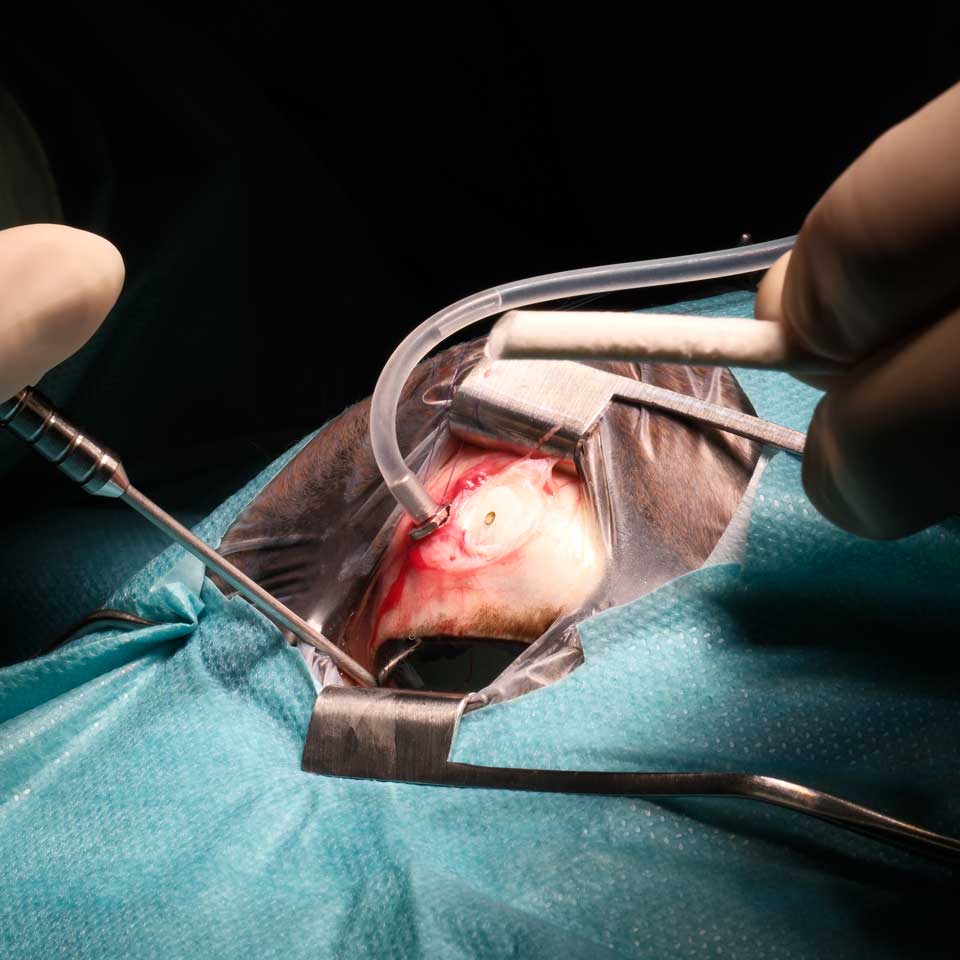
Vitrectomy is a highly specialized microsurgical procedure performed on the equine eye. During the procedure, the vitreous body is fragmented and removed using a device known as a vitrector and is simultaneously replaced with a sterile balanced salt solution.
The surgery is performed using the double port technique. Two small access points are created to the eye and used simultaneously. One port is dedicated to continuous irrigation, while the second port is used to remove the vitreous body with a cutting and suction instrument.
The goal of vitrectomy is to eliminate inflammatory or pathological material from the vitreous cavity in order to prevent further inflammatory episodes and preserve visual function.
Vitrectomy is performed exclusively under general anesthesia and only after thorough diagnostic evaluation and appropriate preoperative treatment.


The most common indication for vitrectomy in horses is Equine Recurrent Uveitis, also known as periodic ophthalmia. This chronic inflammatory disease often leads to blindness if left untreated and is one of the leading causes of eye loss in horses.
Vitrectomy may be indicated in the following situations:

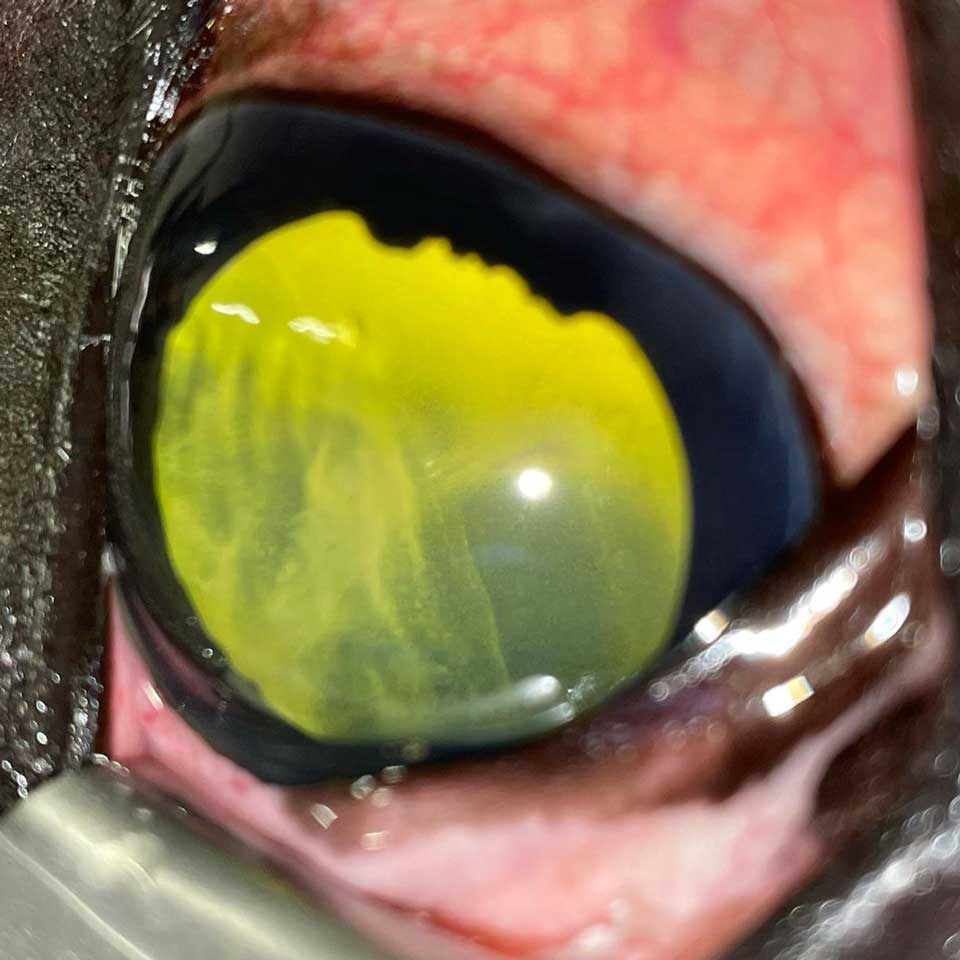

Before surgery, patients are hospitalized at Hanseklinik für Pferde and prepared with intensive topical anti inflammatory eye therapy and systemic pain management.
After surgery, postoperative care includes:
When properly indicated and performed by experienced specialists, vitrectomy offers excellent outcomes:
• Long term freedom from recurrent inflammation in up to 97 percent of cases
• Preservation of visual function in approximately 85 percent of cases
Despite these favorable results, vitrectomy remains a microsurgical procedure with potential risks. These include:
• Intraocular hemorrhage
• Retinal detachment
• Lens opacity or cataract formation
• Intraocular infection such as endophthalmitis


The decision whether and when vitrectomy is appropriate is made jointly by our specialist team and the owner. This decision is based on:
At Hanseklinik für Pferde, every vitrectomy is preceded by an in depth consultation and careful case selection to ensure the best possible outcome for each individual patient.

We kindly ask you to schedule appointments by phone. This way, we can plan the best treatment for your horse individually and directly.
+49 4282 - 5946340Please note our separate visiting hours.
Bitte vereinbaren Sie einen Besuchstermin im Voraus. Planen Sie etwa 1 Stunde ein und berühre bitte nur dein eigenes Pferd.
Our clinic is available around the clock for emergencies.In case of an emergency, please call us immediately.