Corneal injuries in horses are caused by trauma and can vary widely in severity. They represent a potentially serious threat to vision and, in severe cases, to the integrity of the eye itself. Deep corneal injuries are absolute emergencies and require immediate veterinary care.
Corneal injuries in horses can result from a variety of causes. The most common include:

Corneal defects may present with a range of clinical signs, including:
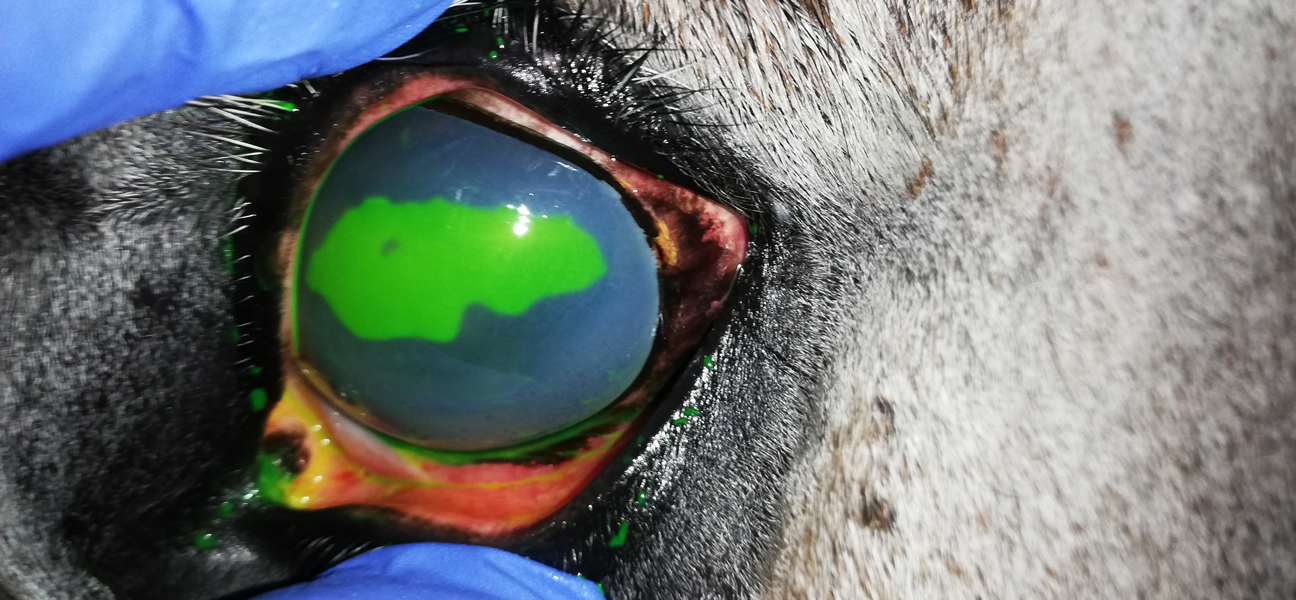
A complete ophthalmic examination is performed to assess all affected structures and determine the appropriate treatment plan. Corneal injuries are visualized using fluorescein staining, a green dye that highlights defects and ulcers of the cornea.
Superficial corneal injuries can often be treated successfully with removal of damaged corneal tissue through keratectomy combined with local medical therapy. These cases usually show good healing potential.
Deep corneal injuries may require surgical intervention, including corneal suturing with or without conjunctival grafting. Additional procedures involving internal ocular structures may be necessary depending on the extent of damage, such as intraocular hemorrhage. In cases of trauma associated with irreversible blindness, removal of the eye may be indicated.
When surgery is required, the eye is thoroughly flushed with antiseptic solutions and the periocular area is carefully prepared immediately before the procedure. Postoperatively, horses receive intensive local treatment to promote uncomplicated healing. Many patients are fitted with a subpalpebral lavage catheter, allowing frequent and gentle administration of ophthalmic medications.
Systemic pain management and additional medications are provided as needed based on clinical findings and progression.
Prognosis depends on the severity of the injury and the individual course of healing and is often considered guarded. Blunt trauma in particular can cause pressure and traction forces within the eye, leading to secondary damage. Infection and impaired wound healing represent additional potential complications.
Early diagnosis and prompt, appropriate treatment are critical factors in preserving vision and ocular comfort.
Any corneal injury should be taken seriously. Deep lesions, severe pain, marked cloudiness or sudden vision loss are ophthalmic emergencies and require immediate treatment to prevent permanent damage.
Diagnosis is based on a complete ophthalmic examination. Fluorescein dye is used to clearly visualise corneal defects and assess their extent and depth.
Prognosis depends on the severity and course of the injury. Superficial lesions often heal well, while deep trauma or complications such as infection may result in lasting visual impairment.
Corneal injuries in horses are caused by trauma and can vary widely in severity. They represent a potentially serious threat to vision and, in severe cases, to the integrity of the eye itself. Deep corneal injuries are absolute emergencies and require immediate veterinary care.
Any corneal injury should be taken seriously. Deep lesions, severe pain, marked cloudiness or sudden vision loss are ophthalmic emergencies and require immediate treatment to prevent permanent damage.
Diagnosis is based on a complete ophthalmic examination. Fluorescein dye is used to clearly visualise corneal defects and assess their extent and depth.
Prognosis depends on the severity and course of the injury. Superficial lesions often heal well, while deep trauma or complications such as infection may result in lasting visual impairment.
We kindly ask you to schedule appointments by phone. This way, we can plan the best treatment for your horse individually and directly.
+49 4282 - 5946340Please note our separate visiting hours.
Bitte vereinbaren Sie einen Besuchstermin im Voraus. Planen Sie etwa 1 Stunde ein und berühre bitte nur dein eigenes Pferd.
Our clinic is available around the clock for emergencies.In case of an emergency, please call us immediately.

We kindly ask you to schedule appointments by phone. This way, we can plan the best treatment for your horse individually and directly.
+49 4282 - 5946 340Please note our separate visiting hours.
Please schedule your visit in advance. Allow approximately 1 hour, and kindly only touch your own horse.
Our clinic is available around the clock for emergencies.In case of an emergency, please call us immediately.

We kindly ask you to schedule appointments by phone. This way, we can plan the best treatment for your horse individually and directly.
+49 4282 - 5946 340Please note our separate visiting hours.
Bitte vereinbare einen Besuchstermin im Voraus. Plane etwa 1 Stunde ein und berühre bitte nur dein eigenes Pferd.
Our clinic is available around the clock for emergencies.In case of an emergency, please call us immediately.